Posts

Showing posts with the label Advanced Materials

Increasing Demand from End-Users Is Driving the Growth of the Global Thermosetting Plastics Market

Image
  Thermosetting Plastics Market Thermosetting Plastics Market, By Type (Unsaturated Polyesters, Polyurethanes, Phenolic, Epoxy, Amino, Alkyd, Vinyl, Ester, Other Types), By End User Industry (Construction, Adhesive and Sealant, Electronics and Appliances, Automotive, Other End-user Industries), By Region (North America, Europe, Asia Pacific, Latin America, and Middle East & Africa)- Size, Share, Outlook, and Opportunity Analysis, 2023 - 2030. Market Overview: Thermosetting plastics are a type of polymer that undergoes a permanent chemical change during the curing process. Unlike thermoplastic materials that can be melted and reshaped multiple times, thermosetting plastics become irreversibly hardened and rigid once they are cured. This irreversible change is due to a cross-linking reaction that occurs when the material is heated or mixed with a curing agent. Competitive Landscape: Major players operating in the global Thermosetting Plastics Market include U-PICA Compan...

Increasing Demand from End-Use Sectors Is Augmenting the Growth of the Global Electroplating Market

Image
  Electroplating Market Electroplating Market, By Product Type (Cabinet Organizers/Drawer Organizers, Food Storage, Pantry Organizers, Sink & Under Sink, Dinnerware & Serving Storage, Others), By Material Type (Plastic, Metal, Glass & Crystal, Wood, Others), By Region (North America, Latin America, Europe, Middle East & Africa, and Asia Pacific)- Size, Share, Outlook, and Opportunity Analysis, 2023 - 2030. Market Overview: Electroplating is a process of depositing a thin layer of metal onto the surface of an object using electrolysis. It involves immersing both the object to be plated (referred to as the substrate) and a metal electrode (referred to as the anode) into an electrolyte solution. The electrolyte typically contains metal salts of the desired plating material. During the electroplating process, a direct electric current is passed through the electrolyte, causing metal ions from the electrolyte to be attracted to the substrate. These metal ions are red...

Aluminum Extrusion Process Is Important For Transforming Aluminum Alloy Into An Extraordinary Variety Of Products For Industrial Markets

Image
                                                                                                               Aluminum Extrusion  In the aluminum extrusion process shape of the finished product depends on the type of press used and its circumscribed circle, which is the smallest circle that can completely enclose the cross section of the extruded shape. Temperature is the most crucial factor in the extrusion process as it is what gives aluminum the desired characteristics. Typically, billets are heated between 800 to 925 degrees Fahrenheit before they can be pushed through the die. The aluminum extrusion process involves shaping dies, which are disks with openings. The dies are made of steel and are heat ...

Polymerization inhibitors significantly slowdown the polymerization process

Image
                                                                          Polymerization Inhibitors Market Inhibitors work to inhibit the polymerization of unsaturated monomers, such as styrene, but they can also act as retarders. While the inhibitors are more potent, retarders can have less of an effect on the polymerization process, as they don't stop radicals from forming. They also slow down the polymerization process, but can't fully prevent it from undergoing. Polymerization inhibitors are chemical compounds that inhibit the formation of certain types of polymers. These chemicals are known as anti-polymerization agents, polymerization retardants, or polymerization controllers. These chemicals work by stabilizing certain reactive monomers and preventing them from undergoing polymerization. They inhib...

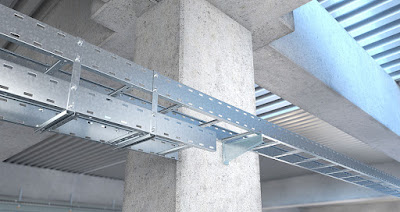
Cable Trays; Used To Hold Courses, Cables, and Wires Safely in Any Type of Building

Image
                                                                                                                           Cable Trays Cable trays are used to support electrical cables for power distribution, communication, and control panel. They are useful in situations where changes to a wiring system are expected and can be installed easily by cabling into a cable tray. These trays are made of various materials, such as fiber reinforced plastic, aluminum alloy, stainless steel, and low-carbon steel, among others. Cable trays find application in various end-use sectors such as power, manufacturing, construction, and IT and telecommunication. Various industries require cable trays...

A metal roofing structure is made from metal sheets or coils to provide corrosion- and leakage-proof rooftops

Image
                   Metal R oofing Metal roofing is made from metals such as copper, zinc, aluminum, or steel. These materials are renowned for their low maintenance requirements and high return on investment. Depending on the type of metal used, these types of metal roofing can last between 50 and 80 years. In fact, they are an excellent choice for homes that require long-lasting protection against the elements. In hurricane-prone areas, steel and aluminum are recommended, while a warehouse in mountainous terrain might be better suited for light gauge steel. A roof that's too heavy may not be structurally sound. Other benefits of Metal Roofing are that it lasts longer and is more durable than other types of roofs. Its energy efficiency is also higher than that of traditional asphalt roofs. Besides, it will save money in the long run due to its long lifespan. Most metal roofs are made of steel or aluminum, which are easy to work with an...